
Who, what, and when: The real power of Portfolio Resource Management
Content
Every company wants to make the most of its people. In theory, it’s simple: assign the right team to the right project at the right time. However, reality feels a bit more complicated than that. Priorities shift, people get overbooked, deadlines clash. And without a clear view across the portfolio, even your best plans start to unravel.
In this article, we will explore the most common challenges in portfolio-level resource planning, the trends reshaping how organizations manage resources today, and how software such as proMX 365 Project Portfolio Management can simplify the whole game.
What’s so challenging about resource management?
Let’s imagine your organization is currently working on fifty separate projects, five more are about to kick off, and a surprise urgent initiative lands in your inbox. The team is motivated, the goals are clear, but as you start assigning people, it turns out you have to work well over time to make it all happen. It’s not that you do not have enough talented people in your team. It’s that they are often pulled in too many directions at once, and no one has a clear view of the big picture. Here are some of the top pain points we hear from decision-makers:
1. No single view of resources
You cannot manage what you don’t even know exists. When resources are scattered across tools, spreadsheets, or departments, managers do not have a clear picture of what each team member is working on or how their time is spent. This lack of visibility makes it difficult to spot conflicts or imbalances. For example, you may not realize some employees are overbooked while others are underused.
2. Prioritization chaos
Without a standardized framework for prioritization, organizations risk allocating people and funds to the wrong initiatives. In practice, this means projects that offer minimal strategic value might get staffed due to loud voices or urgent-sounding demands, while more important projects suffer. This lack of portfolio-level oversight can put the long-term success of your business at risk.
3. Overbooked or underused teams
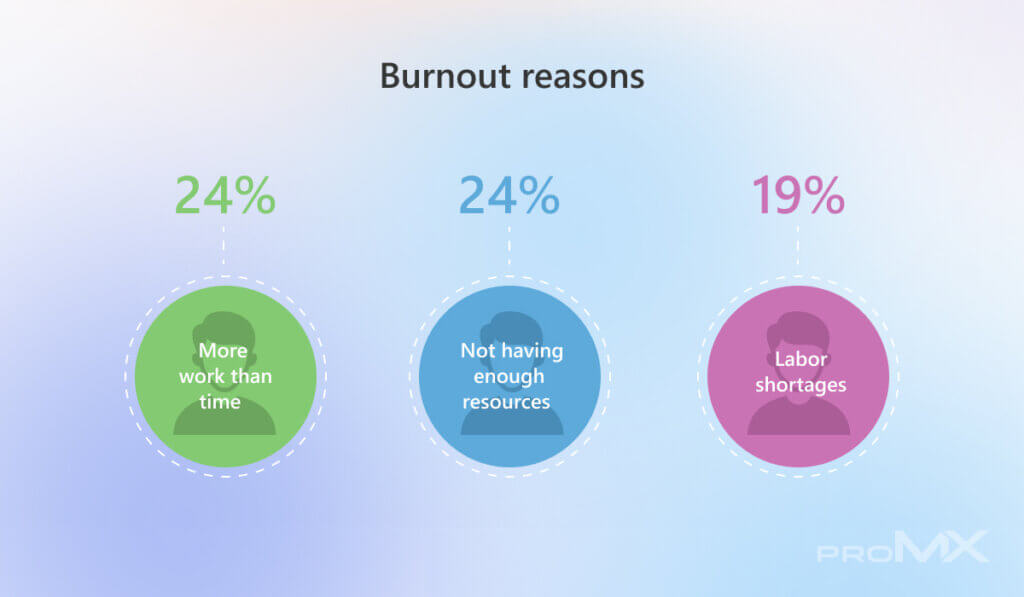
When some employees are drowning in tasks while others are underutilized, it often results in burnout for every member of the team involved. And usually, missed deadlines as well. Moodle, a global leader in ed-tech, released findings that two-thirds (66%) of American employees today are experiencing some sort of burnout driven by:
- Feeling like they have more work to complete than time to do it – 24%
- Not having enough resources or the right tools to do their job properly – 24%
- Taking on too much work due to labor shortages in their industry – 19%
Imbalanced workloads are not just an operational issue; they directly impact the well-being and performance of your team.
4. Disconnect from strategy
Even if your team is not being held back by burnout and puts all the effort into their work, it is crucial that they spend their time on the right things. That is why management needs to keep a close eye on whether or not the current tasks align well with both long- and short-term company strategy. If resource decisions aren’t tied to business goals, even the best-executed projects can feel like wasted effort.
If any of these challenges sound familiar, let’s talk about how you can fix that.
A smarter way to manage resources across your portfolio
Managing resources well does not mean micro-managing every hour of every employee’s time. To tackle the challenges we mentioned in the previous section of this article, organizations need a clear Portfolio Resource Management (PRM) process. PRM is essentially the set of practices that ensure you have the right resources doing the right job at the right time. To achieve that, you can take the following steps:

Step 1 – Forecast demand: Think through what’s coming down the pipeline. Forecasting gives you a heads-up, so you’re not scrambling when a new initiative kicks off.
Step 2 – Check capacity: Compare that forecast to your team’s current workload. Do you have enough people to cover the upcoming projects? If not, it’s time to shift priorities, hire, or upskill.
Step 3 – Match skills to needs: Assigning the next available person doesn’t cut it anymore. Skill mapping ensures you put the right people on the right work based on expertise, not just availability.
Step 4 – Schedule realistically: Plan out who’s doing what, and when. Avoid double-booking, give people enough breathing room, and make sure timelines across projects don’t clash.
Step 5 – Track and adapt: Things change, projects run late, priorities shift, and people go on leave. That’s why real-time tracking is essential. Keep an eye on actual vs. planned workloads and adjust as needed.
With this process in place, you will avoid constant firefighting and start seeing a smoother, more strategic flow across your portfolio.
What’s changing in resource management today?
Resource management isn’t what it used to be, and that’s a good thing. The way we work and manage people has changed dramatically in the 2020s, with the rise of remote work during Covid-19 and AI intervening in every aspect of our lives. To stay competitive, organizations need to rethink their Portfolio Resource Management strategies and embrace a more agile, tech-enabled approach.
Hybrid work is here to stay
Gone are the days when every team member sat in the same office from 9 to 5. In 2025, about half of remote-capable employees are working in hybrid setups (splitting time between home and office), and only a minority are fully on-site. That shift changes everything. Managing distributed teams means planners have to deal with flexible schedules, different time zones, and far less face-to-face interaction. Visibility becomes critical.
In this reality, the solution would be PRM tools that offer real-time insight into who’s doing what and where. With the right systems in place, hybrid setups stop being a barrier and start becoming a strategic advantage, giving you access to a wider talent pool without losing control over execution.
Projects are more complex than ever
Modern projects span departments, regions, and technologies. There are more dependencies, more change, and more moving parts than ever before, and it’s taking a toll on teams. “Change fatigue” is becoming a real problem, especially when people are pulled into overlapping priorities or unclear roles. To keep up, resource planning needs to be able to quickly answer questions like: What if this project slips a week? What if we need two more developers next month? Organizations are increasingly blending agile and traditional methods, building in cross-functional capacity, and investing in tools that help them respond faster without burning out their people.
Real-time data isn’t optional anymore
Static spreadsheets and once-a-week status updates don’t cut it anymore. Decision-makers want live visibility into resource utilization, project progress and team capacity, because things change quickly. When a project runs behind or someone unexpectedly goes on leave, waiting until next week’s report means you have already lost valuable time. That’s why PRM tools with real-time dashboards and live reporting are on the rise.
AI and automation are stepping in
After years of buzz, AI in project and resource management is starting to show real value. Today’s tools can help you match people to tasks based on skill profiles, forecast future resource gaps, and even flag projects at risk before the trouble hits. Automation plays a growing role as well: things like updating schedules, sending out availability requests, or generating routine reports can now run in the background. That means fewer repetitive tasks and more time for actual planning. The key takeaway is that AI isn’t replacing resource managers. Instead, it’s supporting better, faster decision-making.
How proMX 365 Project Portfolio Management makes PRM easier and smarter
Let’s talk solutions. If you are managing project portfolios in Dynamics 365, proMX 365 PPM is built for you: It addresses PRM challenges, and it brings together resource planning, real-time visibility, deep integration with business systems, and smart automation.
| Key benefit | Description |
|---|---|
| Gain complete control over all projects | Gain complete visibility and control over all projects across the organization, ensuring alignment with business goals and maximizing ROI. Enhanced Portfolio Management provides a unified view of all projects and tools to prioritize based on strategic alignment and ROI. |
| Make smarter decisions with Scenario Planning | Make informed decisions and reduce risks by evaluating different project scenarios. Advanced Scenario Planning includes “what-if” tools to simulate outcomes and optimize plans. |
| Stay on budget and prevent overruns | Avoid cost overruns with accurate tracking and forecasting. Real-time budgeting tools compare planned vs. actual costs and help catch issues early. |
| Minimize risks before they escalate | Identify and mitigate risks early using proactive risk management tools and alerts, preventing small issues from becoming major problems. |
| Maximize resource productivity | Efficiently allocate resources across multiple projects and avoid bottlenecks through real-time tracking, improving utilization and team performance. |
| Boost decision-making with AI Insights | Use AI (including Microsoft Copilot) to analyze data, predict trends, and recommend actions. |
| Ensure transparency and accountability | Customizable dashboards and automated reports tailored to roles ensure all stakeholders have the insights they need for timely decisions. |
| Enable seamless collaboration across teams | Full integration with Microsoft tools like Dynamics 365, Power BI, and Power Automate enables fluid collaboration and information sharing across teams. |
| Prepare for growth with a scalable solution | Built to scale with your organization, proMX 365 PPM supports more projects and users while staying current with Microsoft innovations. |

Ready to see it in action?
Portfolio Resource Management doesn’t have to feel like a juggling act. With a solid process and the right software, you can balance workloads, prioritize smartly, and keep your people (and projects) moving in the right direction.
Want to see how proMX 365 PPM works in real life? Get in touch with the proMX team for a personal walkthrough. We’ll show you how to adapt it to your setup and make better resourcing decisions with less stress.
RECENT POST
OUR EVENTS