

Top 3 challenges CFOs face — and how Dynamics 365 Finance solves them
Content
Amid economic uncertainty, outdated data storage, and time-consuming repetitive tasks, CFOs increasingly seek an ERP (Enterprise Resource Planning) to streamline their operations and improve efficiency. One ERP example that can efficiently centralize global financial management is Microsoft Dynamics 365 Finance.
But how exactly does Dynamics 365 Finance improve the financial processes and health of your organization?
In this article, we will explore its key features, benefits, and how it helps to overcome the challenges financial leaders face today.
Top challenges for CFOs in 2025
1. Cost management: How can CFOs maximize AI-driven cost savings?
Current inflation, rising labor and supply costs, as well as increasing AI investments are forcing CFOs to rethink their cost management and get better cash flow visibility, and more agility to respond to changing conditions.
According to Gartner (2025), AI is now at the top of the priority list when it comes to cost management. AI was initially adopted through pilot programs, but it has quickly grown into a vital component of business productivity. As its use becomes more embedded in operations, the associated costs are shifting from short-term experimentation to ongoing, strategic consumption. This has led to increasing AI costs which CFOs should now control by negotiating better AI contracts and using tools to help manage AI-usage and improve data management.
2. Risk management: How can CFOs steer growth amid uncertainty?
Apart from increasing costs, there are also constant risks such as geopolitical tensions or cyber-attacks that might impact the economic health of companies. For this reason, CFOs must become proactive instead of reactive to risks by owning strategic and operational actions.
3. Data and Analytics Strategy: How can CFOs maximize the value of organizational data?
Data is the new gold, but most companies fail to extract its full potential. CFOs are the experts within organizations that can explore this gold mine and lead enterprise-wide D&A transformation. They are expected to play three roles:
- Data Visionary: Define and support enterprise data vision.
- Enterprise Data Enabler: Drive funding and execution.
- Business Partner: Clarify roles and break down silos.
It is estimated that by 2027 around 80% of finance organizations will see their advanced analytics investments underperform in terms of ROI due to lack of adaptation to evolving business needs.
This is why using financial automation solutions like D365 Finance now can empower your role tomorrow.
What Is Microsoft Dynamics 365 Finance?
Microsoft Dynamics 365 Finance is an ERP system designed for large corporations to manage core financial processes, ensure global compliance, and gain performance insights in a centralized environment. This comprehensive financial management software is a component of Microsoft Dynamics 365, which evolved from Dynamics AX, the former Microsoft ERP for finance teams.
The main goal of this intelligent software is to accelerate business growth and elevate financial performance by turning company data into valuable assets. This helps financial leaders make faster, informed decisions, and adapt to changing markets more easily.
Benefits of Dynamics 365 Finance
Thanks to Dynamics 365 Finance, financial leaders can fully own the data of their business and lead data strategy execution, improve ROI on analytics investments, and foster cross-functional collaboration.
Below you can find the main advantages of implementing Dynamics 365 Finance into your business:
- Global readiness: Includes built-in support for multiple countries and languages, making it ideal for companies with international subsidiaries.
- Scalable for growth: Designed to grow with your business, whether you’re expanding locally or globally.
- Unified financial management: Provides a single solution to manage financial operations across all locations and departments.
- Industry-specific features: Offers predefined tools tailored for retail, manufacturing, and professional services sectors.
- Customizable and Flexible: Easily adapts to your company’s structure and evolving needs.
If we take a look at the top 3 challenges that finance teams are facing today, we can sum up the main benefits they are gaining from Microsoft Dynamics 365 Finance below:
How Dynamics 365 Finance can help in cost management
- Cost control & visibility: Dynamics 365 provides real-time financial insights and budget tracking, helping CFOs monitor AI-related expenditures across departments.
- Vendor management: Integrated procurement and contract management features allow CFOs to track vendor agreements, analyze spend, and negotiate better terms.
- Data-Driven decisions: With embedded real-time analytics and Power BI integration, CFOs can identify cost drivers and optimize resource allocation for AI initiatives.
Thanks to Dynamics 365 Finance CFOs gain financial discipline without stifling innovation, ensuring AI investments deliver long-term value.
How Dynamics 365 Finance can help in risk management
- Risk Monitoring Tools: Built-in compliance and audit trails help track financial risks and ensure regulatory adherence.
- Scenario Planning: CFOs can run simulations and stress tests using financial modeling tools to assess risk exposure.
- KPI Dashboards: Customizable dashboards allow CFOs to monitor key risk indicators (KRIs) and align them with strategic goals.
Finally, CFOs can embed risk thinking into daily operations and improve organizational resilience.
How Dynamics 365 Finance can help with Data & Analytics Strategy
- Unified Data Platform: Dynamics 365 consolidates financial data from various systems, eliminating silos and providing comprehensive visibility across the entire enterprise.
- Governance & Collaboration: With role-based access and automated workflows, Dynamics 365 ensures secure and governed data sharing among teams.
- Advanced Analytics: Leveraging AI-powered insights and predictive analytics, Dynamics 365 empowers CFOs to act as strategic data visionaries, enablers, and business partners.
Financial leaders can use the new data insights they’ve gained from D365 Finance to be more proactive by making faster and better-informed decisions which lead to higher ROI and last but not least, higher satisfaction with their jobs.
Core Features of Dynamics 365 Finance
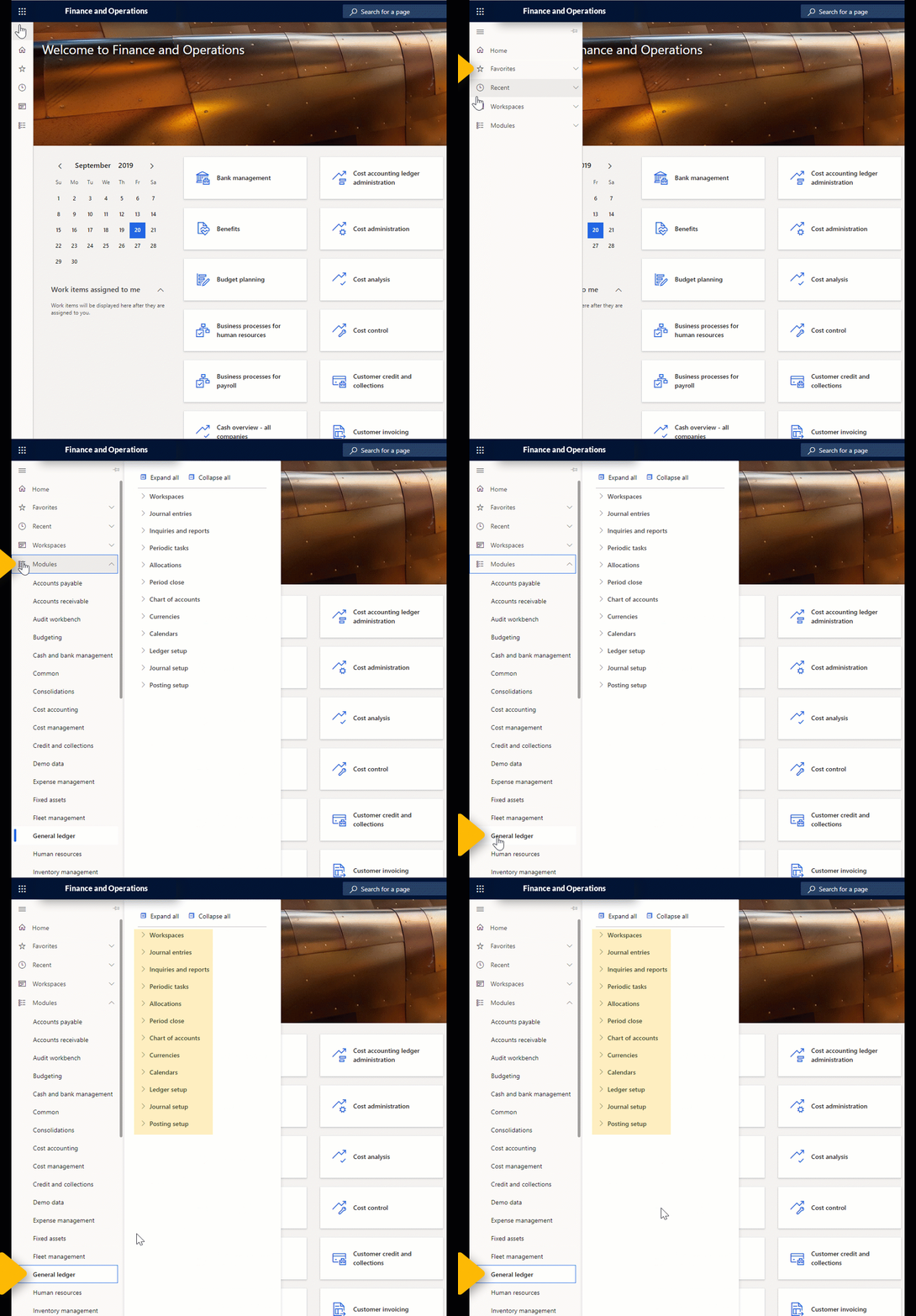
Microsoft Dynamics 365 Finance offers a robust set of features designed to support financial leaders in managing and optimizing their organization’s financial operations. Below are some of the core modules and their key capabilities:
General Ledger
At the heart of Dynamics 365 Finance is the General Ledger, which serves as the foundation of the organization’s financial structure. This module records all debit and credit entries and provides a comprehensive overview of financial transactions. Key features include:
- Accruals management to accurately track revenue recognition
- Allocation of monetary amounts across accounts
- Generation of closing transactions
- Preparation of accounts for the next fiscal year
These capabilities ensure compliance, transparency, and readiness for financial reporting.
Cash & Bank Management
With Cash & Bank Management, you can centralize the management of your company’s bank accounts and financial instruments. It provides a unified view of all bank-related data, including:
- Deposit slips
- Checks
- Bills of exchange
- Promissory notes
Users can perform tasks such as depositing and transferring funds, updating bank balances, and reconciling transactions—all within a single workspace.
Accounts Payable
The Accounts Payable module streamlines vendor-related financial processes. It allows for the setup of vendor groups and payment options, and supports daily operations such as:
- Managing vendor payments
- Reversing payments
- Preparing and processing vendor invoices
This ensures efficient handling of outgoing payments and strengthens vendor relationships.
Accounts Receivable
On the customer side, the Accounts Receivable module consolidates all incoming payments and customer invoices. It enables finance teams to:
- Track and manage customer orders
- Edit customer posting profiles
- Set up and process recurring invoices
This module provides full visibility into receivables, helping organizations maintain healthy cash flow and improve collection processes.
Budgeting & Forecast
The Budgeting module enables comprehensive management of planned budgets and comparisons against actuals. This functionality supports:
- Accurate forecasting
- Trend identification
- Performance analysis
Effective budgeting is the cornerstone of sustainable financial management, helping organizations align strategy with execution and make informed decisions.
Fixed Assets
The Fixed Assets module provides full visibility into the lifecycle of a company’s property and equipment. It allows finance teams to:
- Track asset acquisition, depreciation, and disposal
- Monitor changes in asset value and status
- Maintain compliance with accounting standards
This module ensures that all fixed assets are properly accounted for and managed throughout their lifecycle.
Cost Accounting
Designed to support strategic decision-making, the Cost Accounting module aggregates data from across the system to provide insights into:
- Pricing updates
- Budget performance
- Cost control measures
C-level executives can use this data to evaluate financial efficiency and optimize resource allocation.
Electronic Invoicing
The Electronic Invoicing module facilitates the creation and exchange of customizable electronic invoice documents. Key features include:
- Automated invoice processing
- Secure document interchange
- Compliance with business-to-government (B2G) requirements
While primarily used for B2G scenarios, this solution can be tailored to meet the needs of other business models, enhancing operational efficiency and reducing manual workload.
Copilot for Finance
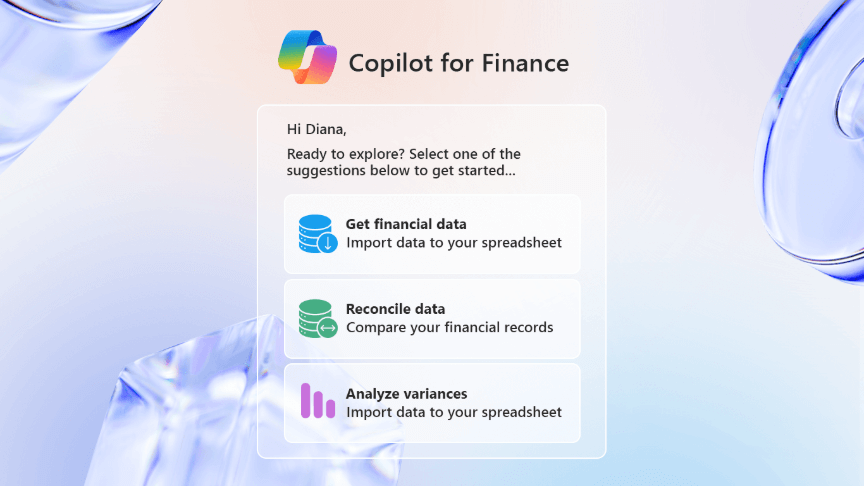
Since 2023 finance teams can extract the full power of their financial data on D365 Finance with the help of the AI-powered assistant Microsoft Copilot. Microsoft Copilot is directly and seamlessly integrated into daily workflows and can assist professionals from various departments, including Finance, to save time and turn labor-intensive tasks into fast and automated processes.
Main benefits of Microsoft Copilot
More time for complex tasks
By automating routine tasks, such as data consolidation and transaction reconciliations, finance professionals gain more time to focus on overall business performance.
Smarter insights
Talk to Copilot like your smart personal assistant: Thanks to Natural Language Processing, the chatbot can understand your queries, e.g. “What customers are currently late paying their invoices?” and give the answer you need in seconds. In addition, it can give contextual insights by analyzing financial data, and predicting outcomes based on historic data. This data can be transformed into presentation-ready visuals and reports that can be easily shared with teams via Outlook and Microsoft Teams.
Early anomaly detection
Detect unusual spending patterns, forecast variances, or other unmatched data early on without the need for a static report creation at the end of the quarter.
Enhanced Decision-Making
Thanks to Copilot’s real-time data access across Microsoft’s applications and AI- generated recommendations, such as budgeting tips, financial leaders can make better informed-decisions.
Improved Communication & Collaboration
Integration into Outlook and Excel allows for better communication across channels, ensuring accurate, fast, and automated data exchange. In Outlook, for instance, you can use AI Summaries to summarize e-mail threads and write replies using ERP data, whereas in Excel you can gain financial insights without struggling with complicated formulas.
Conclusion
Coming back to the initial question: How exactly does Dynamics 365 Finance improve the financial processes and health of your organization?
In an era of constant change, Microsoft Dynamics 365 Finance empowers CFOs to move beyond traditional financial management. By unifying global operations, automating routine tasks, and integrating AI-driven insights with Microsoft Copilot, it enables faster, smarter decision-making.
With robust tools for budgeting, cost control, and risk management, Dynamics 365 Finance helps organizations boost efficiency, ensure compliance, and turn data into strategic advantage. Ultimately, it’s more than an ERP—it’s a catalyst for financial growth and resilience in the digital age.
Want to streamline your financial operations with Dynamics 365 Finance?
FAQs
What is the difference between D365 Finance and D365 Business Central?
Although Dynamics 365 Finance and Dynamics 365 Business Central are both ERP solutions designed to empower the productivity of corporations, both can be mainly distinguished by its target audience, complexity, and pricing. D365 Finance was developed for large enterprises and therefore offers more complete functionalities as advanced financial management. In contrast, Business Central is used by small to medium-sized companies that only require a simple overview of all business operations.
How much does D365 Finance cost?
The price of Dynamics 365 Finance is based on a subscription-based model, and the total cost may vary depending on the number of users and whether you choose the basic or the premium plan. The Basic plan costs $200 per user/month, and the Premium plan costs $300 per user/month.



RECENT POST
OUR EVENTS